
Learning to Believe in Myself: Mackenzee’s Story
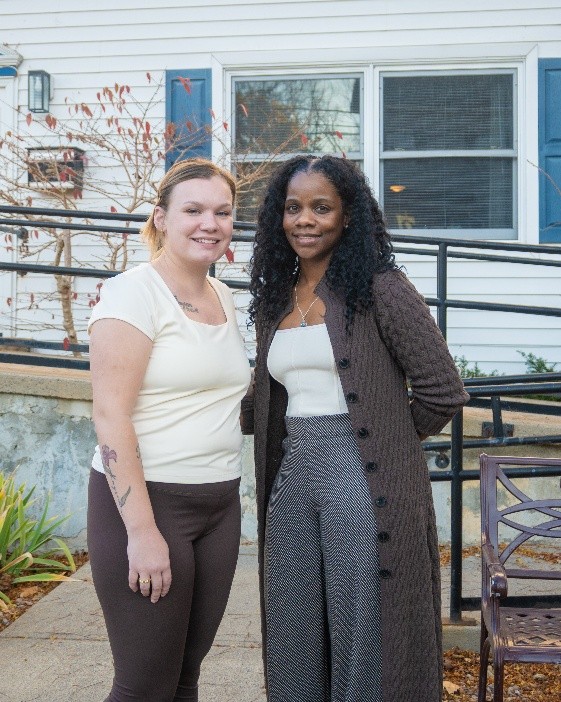
When Mackenzee Wheeler, 27, arrived at Grace House in March 2025, she was afraid.
Auburn was where she had first used drugs, and returning brought her face-to-face with a difficult past. She had spent time in jail and was now only a few blocks from people she knew “weren’t good for [her] recovery.”
Asking for help meant being vulnerable, a risk she had learned she shouldn’t take.
Growing up, substance use was part of life at home. As a teenager, Mackenzee starting use alcohol and marijuana. At 17, she became a mother, hoping that having a son would persuade her partner to stay. It didn’t.
In her 20s, she struggled with her mental health as family relationships grew strained. She had two more children, but eventually lost her parental rights due to hard drug use.
“I knew I wanted to stop,” she said. “But I really had no control… I needed an outside intervention. I needed people who were willing to tell me the truth, even when I didn’t want to hear it.”
When Mackenzee entered treatment court, she was given an opportunity to address her substance use and avoid more jail time.
To meet treatment court requirements, she came to Grace House, Cayuga County’s only residential reintegration program for people with substance use disorders.
Despite her fears, Mackenzee found encouragement alongside structure and accountability. With support from Unity House staff, she began establishing routines, keeping appointments, attending group meetings and taking responsibility for her recovery.
Carinn Hubbard, a CASAC-T and caseworker at Grace House, has been part of Mackenzee’s support network.
“What I saw in Mackenzee was a strong sense of self-awareness,” she said. “It’s something many people struggle to achieve, and because of that, I envision great things for her,” she said.
Grace House’s residential component has been integral to Mackenzee’s progress.
“After spending all day working on yourself, imagine not being able to come home to a safe place,” Carinn said. “Having a safe and supportive environment that nurtures personal growth is essential to recovery. Where someone is going to sleep at night should be the last thing they have to worry about while working to rebuild their life.”
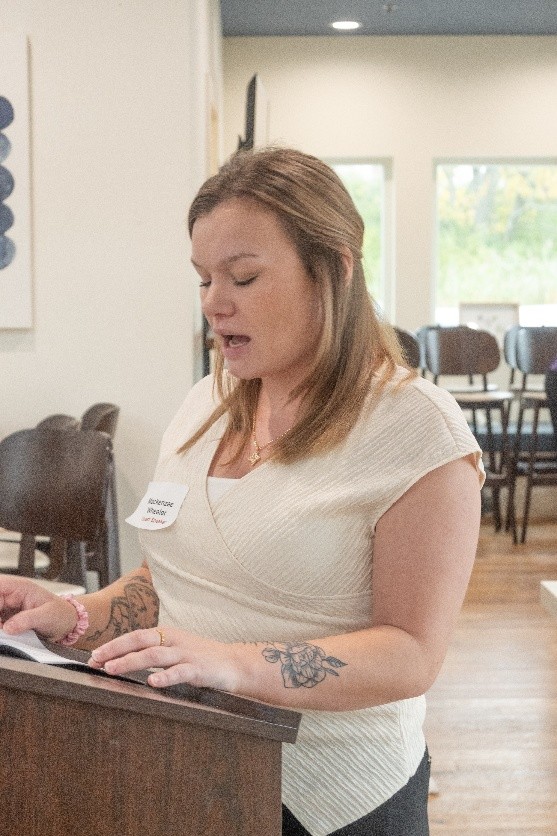
As her confidence grew, Mackenzee began helping others. She completed two internships with treatment court, returning to the program that had helped her change direction.
“I was being trusted to help other people who were walking a road I knew very well,” she said.
Today, Mackenzee lives in an apartment in Auburn with continued support from Unity House. She is in her second year of college, studying human services.
She is also advocating for herself, having recently secured visitation with her children. She facilitates AA meetings at the local jail alongside her sponsor, returning to an environment connected to difficult chapters of her past.
“Now, I can walk into that same environment and bring a message of hope,” Mackenzee said. “I want to sit across from someone and say, ‘I know. I’ve been there.’”